Showing posts with label death. Show all posts

Friday, August 23, 2019

DBP - In Memoriam - August 2019

In Memoriam
D. Brent Pogue (1964-2019)

(Dallas) After so many years, it's not easy to catch-up. We "pledged" to a fraternity together in Austin 36-years ago and could not have expected Brent's death to provide the reason we all gathered together again last week. His passing was a shock. As a cornerstone of the class and a leader in his own "maverick" way, boldly self-confident; he used the same professorial discernment that made him a world-class numismatist. He could see right through your bullshit; past the armor-plated silver, copper, or gold. 

He wasn't naive, but he was generous and soft-hearted. The life of the party, but with a collector's quiet demeanor, and an analytical side bordering on intellectual; he was passionate but didn't give two f*x about some of the things that drove his pledge brothers. He was a devout family man, but didn't have his own nuclear family depending on him. He was a man of contrasts; he was our friend.

On one hand DBP loved Texas, but he lived in California. Brent would enjoy hanging-out and celebrating with you before a football game, but nonetheless he was also very private. Our visitation time during Tuesday, Aug. 13, and Wednesday, Aug. 14 was too brief. Approximately 20 men gathered and like speed-dating, tried to reconnect, remember, and understand where life had taken each one of them on their own journey. Despite the tragedy, we stretched to get past the "secondary-self," which (Ted Hughes alleges) is artificially constructed to deal with the outer world, and the crush of circumstances. Many conversations got past the benign, shedding the outer shell; but as I will try to explain, some did not.

When a few of the pledge class themselves became "trainers" to younger pledges, they took on a "mean" persona. I remember how Brent did it; and there were others. It was a role they assumed by taking the job of overlord. But in contrast, I'm not using mean to convey difficulty. In math, "mean" represents a calculated "central" value of a set of numbers. In organizational psychology a group can "revert to the mean" in the sense that under pressure, they will fall back onto the core values and behaviors that they know best and with which they are most comfortable.

That was going on while we met last week in Dallas. I'm not being critical or speaking as an expert, but with a short amount of time and the many years behind us, we all came to this situation a little raw, reflective, and regretful. Maybe losing touch with Brent represented the lack of engagement we felt as a whole, adding to the duress of experiencing the grief of his passing. One brother called our time "poignant" which is the mood I'm trying to capture here. Another suggested that the way to honor Brent's life and redeem his untimely death, was (and will be) to meet and use the event as an opportunity to reconnect and share new moments together.

The thought in financial circles is that any price that strays from the long-term norm, will again return, or "revert" to its understood state. In my example, since it had been so long since our group spent time together as a pledge class, the personalities, patterns, philosophies, and profiles that were applicable 36-years ago, quickly returned in the few hours we were together. It's been said that mimicking the herd invites this reversion to the mean, and in part due to "efficiency" I heard some original dispositions that I remembered while being an active member of the group so many years ago back in Austin. Reaching consensus involves active listening, which takes effort; nevertheless, it could be that these men are "hard-wired" to behave a certain way in the presence of one of their oldest tribes. Again, I'm not an expert. But there was a very familiar vibe, and I pictured Brent's ghost in the middle of it all, playing his unique role.

We all shared a good "Pogue" story and lifted a few toasts in his honor. Tuesday night's opening at Dallas' Crescent Hotel provided the ice-breaker; thank-you to the hosts: the honorary pall-bearers. The Memorial Wednesday afternoon was "serviceable" but I wish that more of Brent's fun personality had been highlighted during the ceremony. I was not present for the burial at Sparkman/Hillcrest, but I'm sure he's resting under a perfect patch of finely manicured Bermuda-grass. Give the boy a 5-iron for that lie, and swing for the pin Pogo. 

My wild "Pogue" story concerns the Thanksgiving Day we spent watching the Dallas version of the "Ice Bowl" at Texas Stadium in 1993, when the Cowboys' Leon Lett gave us the biggest memory of the season. However, our unique memory before the game occurred driving to the stadium, completing a 360° spin on the icy streets, and just continuing calmly forward in the same direction toward our goal, the game. It was shockingly fast and dangerous, but no one was hurt. Of the many stories told, mine was mild; the Austin narrative tended to be more humorous, edgy, and cool.

Indeed, I feel the same way about Brent's death. Unexpected, sad, but at the same time buoyed up by seeing old friends; I think we've been spun around 360° and shocked by the sudden passing of a vibrant and powerful force in our lives. His memory will stay alive, but we all have to keep moving forward once again. Brent taught us many things: business, economics, negotiation, discipline, humor, football, teamwork, attention to detail, loyalty, fun, courage, passion, kindness, generosity, but most of all we'll remember the love emanating from his natural smile, what some would call an "impish grin." Those qualities will echo on forever and be with us in spirit, every time we meet.

If anything can overcome our sadness, it's remembering how we all came together; at the same time familiar, yet older, wiser, gentlemen who have been up and down, with all sorts of life experiences. I couldn't help but notice in the men gathered: their lines, gray hair, but overall wisdom and good health. Most have become very successful at what they do, many have well-raised children doing great things, even attending the University of Texas at Austin like their fathers. Many are quite generous, helping numerous people on a daily and weekly basis, in all walks of life. The diversity was refreshing.


Outstanding men, delightful to be around, they're businessmen, lawyers, entrepreneurs, pastors, managers, IT geeks, financial planners, entertainment executives, bankers, builders, counselors, husbands, fathers, brothers. Feeding off of each other 36-years ago, learning about life and preparing for their futures, they came back around last week, eager to find out how it all turned out. At the center of all the sharing and revelation, was the magic of how strong and mysterious links enchain the heart to the regions where the "morn of life" was spent. Again, Ted Hughes would say, "the only calibration that counts is how much "heart" people invest with each other; how much they ignore their fears of being hurt, or caught-out, or humiliated. And the only thing men regret is that they didn't live boldly enough, that they didn't invest enough heart, didn't love enough. Nothing else really counts at all." 


Brent's shining example centers at the heart of this group: in his rising to the pinnacle of his profession and by showing the kind of passion rarely seen in the history of collecting rare "early-Federal" coins. There are other stories of success from this group, but I don't have the time nor the space. I will conclude by expressing gratitude to my brothers, congratulations for their accomplishments, and offering an invitation to continue sharing, as the rest of our story unfolds, for however long we are here. Meanwhile, if I may speak for our pledge class, I also want to thank the Pogue family, offer condolences, and tell them that we'll lift up Brent's memory always, and that it will never be forgotten. 

Respectfully submitted, 
MHP

©Mark H. Pillsbury (2019)


Tuesday, August 1, 2017

Writer's Digest Story Contest #83 -- Writing Prompt w/ max of 700 words

Short story writing prompt:

"A man is surprised to find himself feeling both pleased and liberated by the news that he will soon die."

700 Words Maximum:

Rick felt a gut-churning fear he’d fought all his life, ever since he got called to the principal’s office, or when his girlfriend told him she was pregnant. Riding a tumultuous, entrepreneurial roller-coaster put him in frequent high-pressure meetings in the clouds of downtown, called to dark-paneled conference rooms, where fate, future, and fortune hung in the balance. But coming to this specialist panicked him, and the fact that the doctor was so young (and female) twisted the knife in his stomach.

She’d spent half her life studying cancer, but the look on her face reminded him of bankers staring him down at a lender conference. Methodically reviewing testing procedures conducted at the world’s finest cancer facility in Houston, the sincerity with which she explained Stage 4 kidney cancer touched him deeply. It must be hard for any doctor, even one daily waging war against cancer to tell a man there isn’t much hope for a “successful outcome,” she said, as stiff as her starched lab coat.

“Are you talking years or months, Doctor,” urging more than asking.

“I’m afraid my best guess is months, Rick, I’m sorry to say.”

After swallowing the personal premise of pending death, he gulped again and sheepishly, in a childish way asked, “So, this treatment regimen is unbelievably hard, without any real hope of recovery? Am I just going to make an exit looking like a zombie?”

She responded earnestly, with piercing eyes, “We can prolong your life a significant amount of time if the tactics work well.” “But it will be extremely painful toward the end, depending how long your body can take what we drag it through.”

Raw, and emotionally spent, he left the Texas Medical Center disoriented. By the time he sat by his pool at home with his Labrador licking the sweat off of his calf and his hand wet from the chilled highball he held tightly, Rick considered mortality and the feelings of fear and hopelessness crowding his mind.

In business, he consumed numbers ravenously, and it seemed that a guy with only 1.5% left on his battery—maybe 8,000 hours of existence remaining, would be tossing around a dozen emotions; grabbing each one, tasting whether bitter or sweet? He’d lived a long time and lost many of life’s pillars: his wife through divorce, parents, a brother, jobs, houses, even a Cadillac repossessed in the eighties.

However, a strange calm came from the two emotions dominating his thinking: he was both pleased and liberated by the thought of leaving this world. His situation wasn’t preferable but these two tracks didn’t intersect or conflict as he pondered imminent death.

Whether enlightened or unshackled, contentment surprised Rick, heated by the sizzling sun and the hot concrete surrounding the pool. As odd and unusual as he felt, the reaction positioned him unexpectedly to be open to death and consider his life against what he thought he believed of the other side.

He studied the Bible growing up, and took his kids to an Episcopal Church in River Oaks because it was close to his home, but it was probably the hatred for Baylor athletics that skewed his religion to the left. He satisfied his liberal arts love for adventure by reading Revelation like sci-fi literature.

Rick dimly pictured the Lord, white-headed with flowing hair and robes, seated at the head table of a gargantuan banquet, where Rick’s anticipated mourning, crying, and pain passed away. He longed to see the amazing city called the New Jerusalem. Released from gravity, he gazed heavenward and contemplated the brilliance of his future home, as well as he could. Liberation and contentment came from a believer’s travel plans.

Three gates side-by-side, welcomed each named entrant to a wall of the square city, roughly the size of all of North America; each gate made out of a single pearl 2,200 kilometers high. Gold paved streets, translucent and clean, wove throughout a destination where nightfall never came. God illuminated every hour of eternal, joyous days; and in the middle of the biggest boulevard in the city flowed a crystal clear river. Rick planned on walking peacefully near its banks. ##


©Mark H. Pillsbury
Contest entered July 10, 2017

Friday, August 19, 2011

The End

Episode XII of the Storm chaser saga:

©Mark H. Pillsbury

Rick instinctively recalled feeling as he once did at Six Flags® over Texas, where as an eager young kid he rode The Rotor; an amusement park ride where victims stand against the inside of a cylinder, and once the cylinder is spinning fast enough, the floor drops out. The dark, dingy cylinder slowly achieved proper speed and with screaming and crazy looks, one could almost predict the exciting moment.

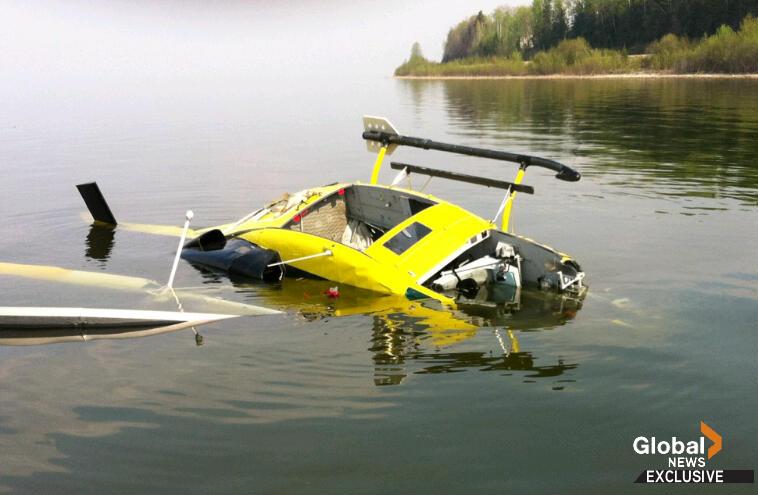
Instead, this JetRanger® fell at once with no culmination or thrills, just killer rotors snapping through intertwined steel cables of a hoisted elevator, plummeting the yellow cage terminally on its side into the water. The concussive blow was slightly relieved by the shallow tank, almost completely dry due to the longest drought in Texas history.


News photography later showed the wreckage at a deceptive angle; what appeared to be a lone helicopter resting sublimely in a Canadian glacier lake, actually was the yellow bird dumped in a dying pond of an east Texas ranch. Placid, shallow, and mossy, their wet grave was surrounded by burning wilderness and a flat clearing designated LZ (Landing Zone b.) Bravo.

The jarring crash hit Rick so hard it knocked him unconscious momentarily, but he revived quickly to see two of Jessica. The double and blurred vision didn’t keep him from finding her across the passenger compartment, blood oozing from her scalp. Jessica looked still and ashen, he thought, as he sloshed through the warm pond water to pull her up to him.

The quiet was deafening, his shock complete, the devastation total; but Rick quietly cradled Jessica’s limp body in the half-submerged compartment of the downed rescue helicopter.

“I am so sorry Jess.” Rick, almost sobbing, softly, lovingly spoke to her bloody face, gently patting her head. Despite the carnage, this was a tender moment; however she was either unconscious or dead. Rick began to conceptualize the suddenness of their fall was due to hitting the wires overhead. At the same time, it was painfully clear the momentum of his love had also crashed. Far-off dreams of weddings, suburban bliss, even children, just as surely were destroyed.

With so much unfinished business, regret, and terror processing through his shaken psyche, his natural urge was for action; however, he sat there listlessly in the murky green water comforting his lovely partner Jessica, “There, there, babe—it will be OK now; you're here in my arms,” he paused, holding back the flood of emotions, “I gotchu safe babe, you’re gonna be fine—just take it easy now, Jess.”

Time stopped for the storm chasers, and it was still like a sanctuary.

“God, take her from me now, please, I love her so much… Keep her safe for me, I love her so…” Rick could barely whisper, his eyes clenched shut. Grief robbed him of his voice.

He looked at her now in a daze, smiling sorrowfully, “Jessica girl, you get to ride the wind now, sail above the big storms and keep watch over me—will you watch over me, Jess?!” Rivulets of tears watered his pain.

Finally, Rick broke down and heaved with silent sobs, holding her closely to his heart, muttering, “There, there, Jess… it’s OK now...” But for Rick it was over. She was gone.

©Mark H. Pillsbury (Aug. 19, 2011)

Friday, August 5, 2011

The Crashing Conclusion (Stormchaser Saga)

Slave-Lake-helicopter-crash.jpg (758×495)

Part XI (A Time to Die) Fiction ripped from the headlines...

©Mark H. Pillsbury (2011)

A yellow JetRanger emergency helicopter pulled away from the smoky scene nose down, trying to attain the necessary lift in order to clear the tree line, rotating slightly during ascent.

The whirring high-pitch ring of the reliable jet engines combined with rhythmic slapping of each blade against the air. It deafened their ears momentarily, and along with the swirling wind and jet wash coming in the open rescue door, disorientation reigned over the the stormchasers because of the skirmish they were having with gravity.

Either the heat blast from the fires or lack of acceleration seemingly blanketed the aircraft in opposing thrust as if it were escaping from under a cap of pressure.

Because the passengers quickly jumped into the vehicle not properly secured, Jessica fell into the back of the pilot’s seat grabbing for a strap, looking straight down out of the wide canopy windshield back into the fiery pit of burning trees below.

Gripped with fear again, the exhilaration of rescue and survival dissolved into airborne dread. Even as light as the helicopter was, less than a ton after the drop, rising at over 20 feet per second; the ascent illustrated the simple concept of hubris.

Helicopters were aircraft that defied the concept that a bulky, wingless shell of metal should not be able to break the bonds of nature and imitate a bird. It was more human than avian, however if it flew without any impediments was perfectly safe; it was the crashing of a helicopter that was dangerous.

Jessica thought as they rose over the forest they were finally clear of trouble, but in her peripheral vision she saw a super-structure, an electrical transformer, gigantic above the pines like the Eiffel Tower. The long gray power cables were hard to see against the smoky horizon but immediately she sensed they were too low, about to be consumed by a whole universe of hurt.

“Rick! Hold on.” Jessica screamed above the hum. He was barely aware of the words but saw the fear splashed on her features. “What?!” He yelled. Jessica pointed over to the tower but Rick was slouched too low to see the danger.

The next few seconds were light, slow, and almost dawdling like an old Vietnam war movie where the thwap-thwap-thwap became part of the theater of the absurd: there was that dark middle region of time travel in her mind, when allegedly one’s life "flashes before your eyes." For Jessica it was different, like many moments in her surprising life. She strangely thought about what their child would look like, and even whether they would find out the gender before the birth. That was the true measure of compatibility, not political or religious or regional, but what a couple agrees to do with information from a sonographer.

“We’re too low!” Jessica shouted to Rick. The pilot heard and turned around to question the pronouncement, but deadly accurate in her assessment, they plowed underneath the electricity cables spanning the distance between two high-rise transformers. The angle of the ship caused the contact to be direct, the span of the blades extending at least 15 feet outside the turboshaft.

When a rotor-blade strikes something other than the air, it makes a perverted thud: metallic, crashing, tearing, and echoing as the rest of the blades whip around from behind, like a multi-car pile-up. One thing also stops on the dime and that is lift; which is like taking the oxygenated blood out of the left ventricle right before it pushes red goo into the circulatory system.

“Gawd-amighty!” was all Rick could muster, the toxin of fear suddenly released into his system, a combination of snake-bite and lethal injection. They lurched forward and then fell. He reflexively looked out the open door and could see the water rushing up toward them.

“Jessssssssiccccccaaaa!” he yelled back toward the pilot as he tried to grab onto a strap or something to brace the fall. He fell through space with the whole motley confusion of regrets, hopes, omissions, and chance rattling around in his head.

Without lift provided by the rotating blades helicopters stay airborne for only a couple of seconds, in a wondrous moment where gravity and acceleration are in total equipoise. Next it took a methodical, disastrous roller-coaster down to the earth; however, once again luckily, the golden machine mercifully collapsed into a shallow tank that used to be an acre-lake mostly devoid due to the drought. It could have been worse.


Jessica dreamed of her homeland: Oklahoma, where she saw so much natural beauty; although it was a gauzy, ephemeral, cloudy dream, jarred loose by the massive head trauma she received during the crash at the sharp corner of the pilot console.

From the vistas of Black Mesa to the crests of the Ouachitas that led into Arkansas, she had a birds-eye view north to the Great Plains with Indian lands in between. In the distance there was a massive tempest, a super-cell wide and gray-black with intermittent lightning, the outer bands aqua-marine, layered, extending upward to the boundaries of the horizon. Jessica knew these storms, seen many, but this one was gathering, twirling, rumbling, blasting, somehow calling her ominously as nothing had before in her memory.

She could not tell if it was drifting toward her or vice-versa, Jessica was too tired to decide. She just wanted to dissolve into nothingness as her attention faded, her very life leaking away. It was time.


“Fear no more the heat o’ th’ sun,
Nor the furious winter’s rages,
Thou thy worldly task hast done,
Home art gone and ta’en thy wages.
Golden lads and girls all must,
As chimney-sweepers, come to dust.

Fear no more the lightning-flash,
Nor th’ all-dreaded thunder-stone,
Fear not slander, censure rash,
Thou hast finish’d joy and moan.
All lovers young, all lovers must
Consign to Thee, and come to dust.”
--Shakespeare (from Cymbeline)

©Mark H. Pillsbury (this is a work of fiction, any similarities with factual accounts or other creative pieces is purely coincidence. Composed 5 August 2011)

Sunday, July 17, 2011

Part VI (fiction ripped from the headlines) The storm-chasers saga...

Thwap

At last, turning onto this back road only made matters worse. The anxiety felt when you miss an important exit, or stall behind a wall of traffic, knowing you will not make the meeting just touches the desperation beginning to set in, even for optimistic Clay.

Thick, smoky air swirled like a heavy dark curtain rolling down over the last night of a performance; the fuel-rich heat seared the moisture out of their eyes as they all reconvened for the last time. Coughing, crying, panicked Jessica held onto Rick’s sleeve as they discussed options. He loved her just then, she rarely showed weakness during their adventures. Rick thought it showed a true care had burrowed into his aching heart, despondent as it was that he could not give her comfort.

“We are so lost, Clay! What good is this doing?!” Rick pleaded. “I got no connections over any of my devices, no GPS, no clue where this wildfire will turn!” He continued, “I got nothing, man, how boutchu?”

Clay shrugged. “What the hell do you do when you get trapped by a twister?”

“We don’t!” Rick barked. “We usually run a lot faster the opposite direction! There’s a way to know which way to run--it’s called radar?!” He was frustrated by the helplessness. Just then they heard a tall pine crack and crash to the ground. It was an ominous punctuating scream from the forest’s death throes. The hot shear blew at them like an oven opened, but as if they were sticking their heads inside.

Feeling that reversing their path would only complicate their position, for just a moment they stood together as they would at the tee box of a round of golf looking down the verdant first fairway full of hope. Instead, they contemplated their dangerous location in the middle of this hot cauldron of fire. No one admitted it, but this was the point where these friends reached the end of themselves.

Clay did nothing more than drop his head. He silently prayed that his Lord would deliver him from this fiery trap, and that he would be given the ability to persevere and not give up hope; he even gave thanks that his hope was not in this world but it resided in heaven. Clay kept faith that this was not the end, although he was out of ideas for rescue.

photo credit: Chris Carlson, NCDFR

Thwap, thwap, thwap. They lifted their heads to the heavens and saw a beacon of hope. Thwap, thwap, thwap beat rhythmically over the horizon as the Sikorsky helicopter flew closer to the worst portion of the fire wall. The pilot watched his instrument panel, but the storm-chasers looked up with amazement.

“Lord have mercy,” Clay exclaimed with a chuckle. With a mind cleared by hope, Rick leaped to the back of the Tahoe, where he dug into the wheel-well. He remembered that he picked up once a complimentary flare-pack at an extreme weather convention. Finding it immediately dusty and dirty from neglect along with the spare tire, he ripped the pair open eagerly while trying to read the symbol directives for operation. “Maybe someone will know we are down here!” Jessica gasped.

photo credit: Red Cross

At a nearby fenceline, the raging inferno came out from behind the trees like a robber, finally playing his hand. It was as if all societal boundaries had been breached and the devil was welcoming them to his party. They felt so exposed, insecure, helpless, even weak like children, facing this wall of flames; Jessica fell in behind Rick and wrapped her arms tight around his torso, peaking out around his wide shoulders.

Unfortunately, road flares only sparkle on the ground, not able to shoot directly at the helicopter. After its first pass the huge ship flew out of sight and no longer cut the air with such whipping force. Clay thought of the old saying in Ecclesiastes, “there is a time to live, and there is a time to die.” They did not know which one it would be.

photo credit: WSPA

(...to be continued in Part VII)

©Mark H. Pillsbury (17 July 2011)

[this is a work of fiction, any similarities to other works of fiction, TV, or film, are purely coincidental]

Sunday, July 10, 2011

How hard is Death... Part 4 of the storm-chaser saga...

And as we stood near the taffrail side by side, my Captain and I, looking at it, hardly discernible already, but still quite close-to on our quarter, he remarked in a meditative tone:

"But for the turn of that wheel just in time there would have been another case of a 'missing' ship."

"Nobody ever comes back from a "missing" ship to tell how hard was the death of the craft, and how sudden and overwhelming the last anguish of her men."

"Nobody can say with what thoughts, with what regrets, with what words on their lips they died. But there is something fine in the sudden passing away of these hearts from the extremity of struggle and stress and tremendous uproar—from the vast, unrestful rage of the surface to the profound peace of the depths, sleeping untroubled since the beginning of ages."
[from "The Mirror of the Sea" by Joseph Conrad (Harper & Bros. 1906), page 101]
Decision-making happens along points in time: planning, policies, procedures, precedence, preparation, priorities, programs mean nothing when the urgency of a decision dominates the moment.

With lip service to these systems we hold dear; it is emotion, instinct, intuition, and common sense that often rise up as influencers of whether we move one way or another.

Gathering data like a sponge, comparing it with what has gone before, weighing the costs of one direction with the benefits of another; one cannot know the thinking of decision-makers, we cannot know the games playing in their head.

Assuming that reason, fairness, honesty, objectivity, rational experience, and logic plays into decision-making seems comforting, yet it is no more predictable than the course of a tornado. And if God controls the universe, our galaxy, this solar system and all its inhabitants; then who can know what paths to take?

With momentary inputs we do the best we can, hoping others operate similarly; or even better, actually implement the strategies they worked so hard to devise. Training becomes routine, routine becomes habit, habit roots deep in our brain’s conduits and eventually becomes almost automatic behavior during a regular 12-hour day. This turns into a pretty good life.

Nevertheless, at this crucial point, these junctures seem the same as daily, mundane decisions. For Clay, Rick & Jessica, danger and opportunity meet on a dusty road in Liberty County, Texas. 30-foot high flames roar to life, demanding attention. These young friends peer down the path and discuss quickly what to do next, the heat rising around them. Time, fear, and asphalt roadway limits their ability to operate methodically, with the luxury of balanced discussion. This is a crisis, and the hunters seem now to be the hunted.

(to be continued in Part 5...)

Fiction ripped from the headlines… ©Mark H. Pillsbury (2011)
photo credit, http://vi.sualize.us

Wednesday, July 6, 2011

Texas wildfires: the escape (fiction ripped from the headlines)


Part 3: The Escape

Ironically, Gregg Allman’s sad dirge, “Midnight Rider” played on Sirius/XM® radio as Rick cranked the Tahoe’s ignition. “Outlaw Country,” Station 332 suited him fine as they wove their way through east Texas to find the ranch.

The lyrics, “I’m not gonna let ‘em catch me no/not gonna let ‘em catch the Midnight Rider,” inspired no confidence as both the weather wunderkinds focused on the red tail-lights of Clay’s truck which sped out the front gate kicking up a blinding dust cloud all the way onto the road, away from the wall of fire.

Nature’s fury has myriad forms, whether 100-feet below the ocean as a rushing current or approaching a massive tornado; Rick and Jessica knew intimately the harm that can come from the physical world in a matter of seconds. Even recognizing how fragile one holds to human life, like everyone they rarely feared imminent death; although frequently exposed to it. Nevertheless, today on a rural road in Texas, they finally took a right-turn which turned out to be a dead-end.

“C’mon Rick; catch up!” cried Jessica.

“Babe, look at the computer, and let me drive,” replied Rick, intently. “See if there is something to tell us where these fires are!” They fled at high-speed but their bandwidth for internet was dial-up slow.

image: Clint Harrington

After zooming down hilly back roads straining the capacity of the Tahoe, clinging to the contrails of Clay’s truck; they swooshed up-and-over a rise in the road finding him pulled over on the shoulder, brake lights glowing devilishly red through a cloud, like evil eyes. Rick didn’t know how far they'd travelled, only that they sped generally in a southeast direction. Both jumped out, approaching the driver’s side of the pickup.

“Can you see down toward the bottom of that next clearing?” Clay said as he looked forward through the windshield, not exactly asking a question, “I see flames and smoke rising above those trees?! Izat what you see?!”

photo credit: Idaho

“Could there be another T-intersection down there before we hit the wall?” Rick responded with panic in his voice, almost a shout; squinting a look down the path, silently agreeing with Clay’s observation.

“Can we at least try 9-1-1?” Jessica pleaded, “Maybe they could bear down on our GPS; tell us which way to turn?”

This turning point hinges on the decisions they make in the next two minutes; however each of the drivers eagerly wanted to get back behind the wheel, with itchy pedal-feet like a gunfighter fingering a holster. The traditional Chinese character for crisis (wēijī), widely abused by western motivational speakers, allegedly means the intersection of danger + opportunity. Danger is there alright, but the secondary word is more of “crucial point,” than opportunity. Crisis visits these young people through dark, hot, encircling flames, and no real exit strategy. As hard as it was to fathom, they are lost on an obscure back road in rural Texas without a credible opportunity for escape. This is the most crucial point in their young lives.

To be continued in Part 4....

©Mark H. Pillsbury (6 July 2011):
This is a work of fiction, and similarities to real individuals or other copyrighted material on cable TV or satellite radio is merely a coincidence