Showing posts with label impact. Show all posts

Sunday, January 29, 2017

WORLD PETROLEUM COUNCIL PICKS HOUSTON TO HOST CONGRESS IN 2020:

YOU THINK Super Bowl LI® IS A BIG DEAL?

With the economic, logistical, and cultural impact of a giant meteor, looming over the City of Houston on the eve of Super Bowl LI, February 05, 2017, there was another December announcement given to the city like a beautiful Christmas present, by the World Petroleum Council [“WPC”]. They bestowed on us the privilege of hosting another Petroleum Congress for the world audience to once-again come to Houston in 2020.
The WPC was established in 1933, based in London, with the intent to promote the management of the world's petroleum resources for the benefit of mankind, because energy is the lifeblood of economic and social development.
WPC facilitates dialogue among internal and external stakeholders in the petroleum industry on key technical, social, environmental, and operations management issues. One of the primary goals is to accomplish solutions to these issues in a neutral, and non-political way.
As more oil and gas is discovered unconventionally, it is clear that we have entered an era of hydrocarbon abundance. Although exploration and development projects executed in the next 20 years will become more complex, more difficult to execute, and more expensive, many of the leaders of the profession are leaving the field or are near retirement.
So during this time of massive change, following one of the longest downturns in the economics of oil and gas in history; the interchange of ideas and the upbringing of a new generation of energy professionals is as important a goal as when the WPC started in 1933.
The need for abundant fuel is just as acute in 2017 (e.g., more than one billion people lack access to electricity and modern cooking fuels, and 75 million new cars are sold each year, globally). There is an incredibly strong correlation between the use of fossil fuels and life expectancy, and between fossil fuel use and income; one can observe the recent history of China and India as examples. Human “flourishing” requires resources, and abundant energy (points made by Alex J. Epstein in his book “The Moral Case for Fossil Fuels,” 2014).
The First Congress, London, 1933
The First Petroleum Congress opened on July 19, 1933 at the Kensington Science Museum, led by its President, Thomas Dewhurst, and 830 delegates from 35 countries. There had been  massive developments in the oil industry since the last scientific oil conference, held in 1907, so presentations were given on the large numbers of reports on the geology of specific fields all over the world and techniques used in exploration and development. Topics included: knock-rating in motor and aviation gasoline, the development of special fuels for high-speed compression engines, recent developments in lubricating oil and viscosity, hydrogenation and the testing of bituminous emulsions.
Houston Congress, 1987
The 12th Congress was held in Houston from April 26—May 1, 1987 and coincided with the massive Offshore Technology Conference (“OTC”). Close association and joint promotion resulted in higher attendance at both events. Then Vice President George H.W. Bush supported the US bid to host the Twelfth Congress, while the US Secretary of Energy, John S. Herrington, took part in the Opening Ceremony.
At the Houston Congress 2,286 participants from 72 countries presented 104 papers. During the conference, the most serious accident in the nuclear power industry to date occurred at the Chernobyl nuclear reactor, in the Soviet Union. Again, this accident raised serious doubts about the expansion of nuclear electricity generation.
The 23rd Congress, to be held in Houston, 2020
WPC bestowed another honor, long overdue, on Houston, by choosing it to host the 23rd Congress in 3 years (2020). Again, thousands of industry leaders will meet here in the world’s energy capital to present papers and carry on the tradition of discussing, learning, and promoting better management of the world’s petroleum resources. The economic impact during December 2020, typically a slow period for tourism, will be significant; most likely as impactful as any OTC of previous years.
Though not as dynamic as 2017’s Super Bowl LI, the WPC is known as the “Olympics” of the oil and gas sector, attracting over 6,000 delegates, 500 Ministers and CEOs, with an expected total of over 25,000 visitors to our city. Shortly after the mess is cleaned up from the massive invasion of professional football fans, the city can start gearing up for the 23rd World Petroleum Congress. Merry Christmas, 2020! 
##

©Mark H. Pillsbury

Sunday, March 23, 2014

Taking Potshots at Potholes

Taking Potshots at Potholes:
Public Stewardship & Public Enemy #1
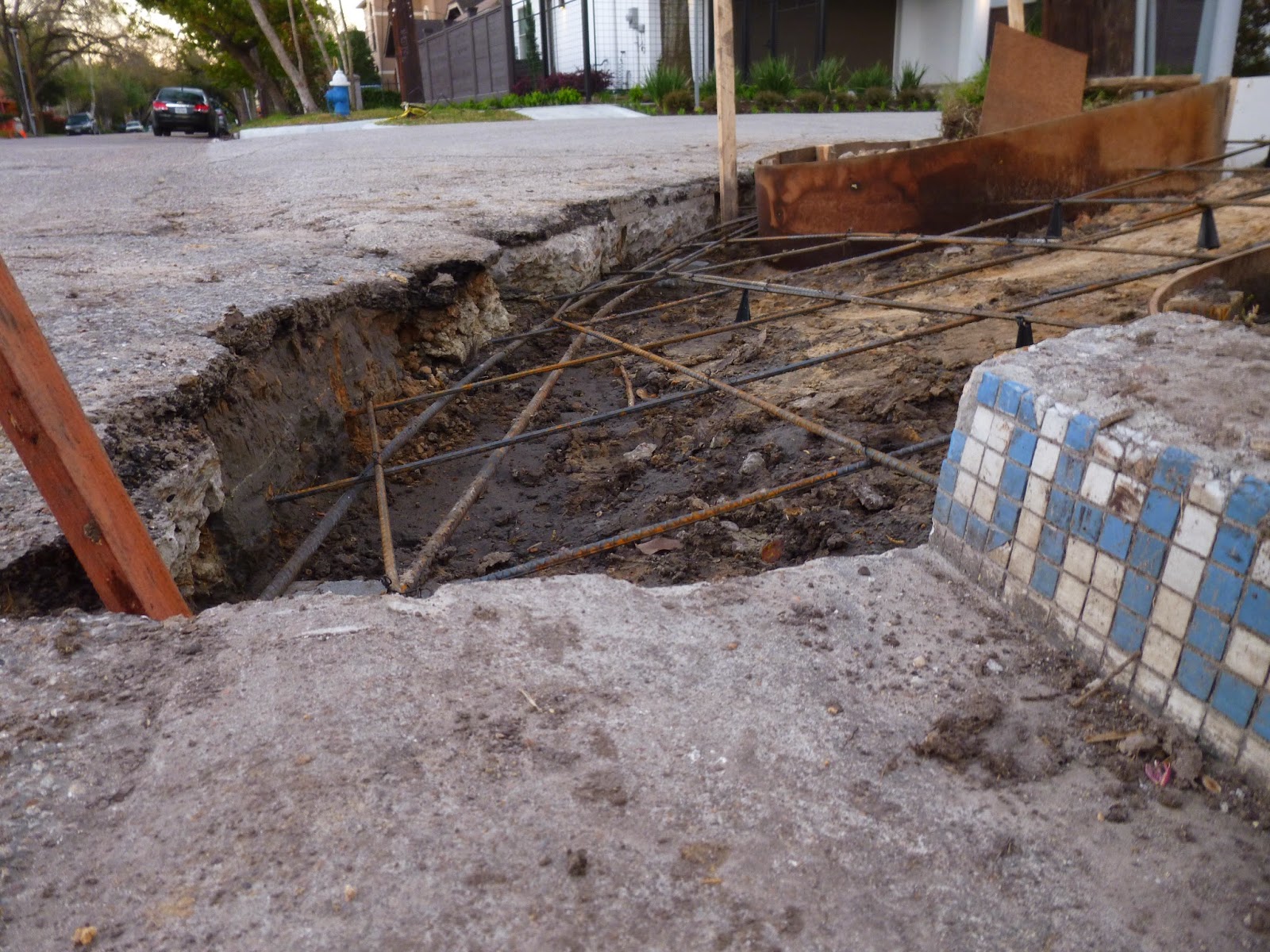
An immediate gratification, “rock-star” culture says, “you can have it all;” so why can’t the City of Houston have sexy parks, bridges, trails, foliage, bayou views, separate paths for bikers and runners; as well as smooth streets without potholes?
 

Citizen drivers weave around on decaying streets, further burdening them as they try to live their stressful lives. A smooth ride is interrupted by a sudden jolt, unexpected and jarring. Pressure builds, heightened by the inconvenience and pain of traffic in Houston: too many people going in the same direction at the same time. I believe that minimally, our government owes us good roads, just as it says it owes its citizens equal justice under law. Don't you agree?
As my car’s under-carriage rattles over concrete crevasses, dodging massive cracks in our pavement the size of the San Andreas Fault; there’s no avoiding the havoc wreaked by this civic catastrophe. If you’ve ever survived the gauntlet of Houston’s potholes in almost any neighborhood, look at the vehicle in front of you as the road tries to eat it alive; most of our automobiles weren’t made for this kind of abuse. Watch the violent shaking and jostling  of the car’s suspension in front of you; if you see natural mechanical reactions then let me know: it looks horrible to me.
Blogging about this problem is my humble attempt to echo satirist Paddy Chayefsky’s famous line spoken by the outrageous Howard Beale in Network (1976). Don't view my effort as caricature; indeed, my hopes are that at least one local elected official, even the Honorable Mayor, would read this and know that there are thousands of honest, taxpaying citizens of this city that are thinking the same irate thoughts but don’t have the time, voice, or platform to yell out from their car windows:
"I'm as mad as hell, and I'm not going to take this anymore!"
(MGM, 1976)
Buffalo Bayou Park stretches over 10 miles from Shepherd to the central business district with a wide variety of public recreational areas on both sides of the bayou. Multiple years and millions have produced a gem for all Houstonians. I’m not anti-park or anti-public recreation; this new area along the bayou is Houston’s answer to Central Park. Having exercised in this area, it's clear it is a wonderful addition to our public life; however, I also drive hundreds of miles all over Houston’s lousy streets, bouncing from one canyon to another in the regular roadways of our city. To which person do we cater? The commuter or the tri-athlete; the delivery truck or the strolling mommy? If the solution is not unlimited taxation; civic priorities must constantly be weighed like a personal budget: wants versus needs?
 
Buffalo Bayou Park Under Construction
I’m not complaining that there are as many construction cranes and concrete trucks barreling along Houston’s roads as any city in the country. There is inconvenience in “progress;” just as the drought and roots of our massive live oaks buckle the ground underneath the road beds.
 

This blog-post is heavy on advocacy and light on blame; potholes surpassed mosquitoes as public enemy #1 in the bayou city—the solution is not complicated: spray for pests and patch the holes in every neighborhood. If NASA can put spaceships into orbit, our elected representatives can fix the plague of potholes. One district, one street at a time!
 
This chastisement of public stewardship finds root in the recent wasting of city funds on non-performing investments like red-light cameras (Civil settlement, $12MM), or Astrodome maintenance ($1MM/annually). One repaired hole costs $20, so I'd trade a dark Astrodome for 50,000 less potholes, wouldn't you? And this pothole-burden isn’t an isolated situation; there are other city's municipal budgets shrouded in debt, or floundering in mismanagement whose streets engulf drivers too. On the other hand, this city is booming; there’s no reason all our gasoline taxes can’t fix the crumbling roads. It's a management problem Houston; but where is the political will to fix it? Is anyone listening?
 
(Ever heard the joke; Q: How many City of Houston workers does it take to fill a pothole? A: 9!)
 
Government at the local level is about as basic as it gets in politics! This isn’t about Super-PACs, Hilary Rodham-Clinton, or Meet the Press. CNBC’s Rev. Al Sharpton won’t stoop so low as to talk about potholes, because they don’t involve race. Nevertheless, this political message carries immediate impact: the same way my car shakes with a boom; unexpectedly careening over a gaping chasm of concrete. If Houston is a first-class, global city; it should act like it.
Mayors famously lose their elected offices for not clearing snow or rescuing stranded citizens in a hurricane? The key component of a city government is their Budget: it’s the city’s business plan. Whether to spend important budget dollars on one project over another (especially when they're both good) provides circumstances in city government critical to quality of life in the town. Even in a city as large as Houston, tough choices can cost elected officials their jobs. Now is this sort of time. I’m urging our city government to drive around the streets and realize the embarrassing condition of the roads: pocked and pitted, gaping gashes, ribbons running like giant fissures; streets grey and cratered like the Moon's surface. While running along our largest bayou is a newly constructed, pristine fitness path:
Trail under the Waugh Bridge
Unlike Howard Beale, I’m not trying to get you to do anything. No class-action lawsuit, no riots, don’t call your favorite talk show on AM Radio, don’t even write your Congressman. I wouldn’t know what to say to a Congressman anyway. They answer your letters with canned forms, computer-generated rhetoric, anyway?! If you feel led; communicate however you feel comfortable. If you hear me, forward someone a link to my blog. I’m speaking for you right now by saying, "I'm mad as hell about these terrible Houston roads ruining my nice car!” 
Scenes from the Pothole Playhouse: 
(Screaming)
(Citizen): “I'm not going to take this horse-pookey anymore; our city has enough money to fix the potholes; if it would just use the political capital to do so;” he adds, "I'll be the chairman of the Pothole Task Force."


(Pointing accusingly)
(Second citizen): “For once, do something practical with our money; not just what gets the fancy attention, like a pretty new Park!” “Jeez, dude. Do your job, or let someone else try…” "It's not that darn complicated."
 
 Op-ed©2014—Mark H. Pillsbury (Houston, Texas)

Follow more on Twitter® (@markpills) 

[Serious Legal Disclaimer:  thoughts expressed here are my own, and do not represent the political opinions of any group, organization, or corporation with which I associate. The first amendment and the rules of the blogosphere protect all the free speech exercised herein. This doesn't represent a political cause or party, nor does it endorse a particular candidate. If an elected official feels offense or shame over the subject matter of this post, their response is out of my control, and they need to take a long look in the mirror.]

All pictures are ©2014—Mark H. Pillsbury (Houston, Texas) #nofilter
 
-30-


Tuesday, January 24, 2012

It's all about the Brand

My take on the Brand

Branding is ubiquitous but important. Talking to my friend Stan Voelkel today at lunch made me think,

What brands “impact” you?

Starbucks is all about “your order,” funky jargon, even personalizing the cup. It isn’t just an ordinary Styrofoam cup, it has style.


Doesn’t the local Starbucks remind you of the TV show “Cheers” in some way? That is part of the brand. It's about more than coffee, it's about community.

Some others:
Target
Honda
Barak Obama 2012
Apple
Twitter
Stan Voelkel

Each one carries more meaning than the product, person, or service. It is dynamic.

The Houston Texans N.F.L.® brand is all about fan fun! The organization wants the fan experience imbued with passion. The noise, the smoke, the bulls, the spirit, the music. Texans brand is strong. It built momentum this year. Winning will do that (ahem, Houston Astros?! They might just re-brand).

If you are thinking about your own brand, or what you do as a service/product, here are some questions you must consider: 
  • Perceived need:   what do your customers need?
  • Brand awareness:   what information is your customer gathering about you; is the message cohesive?
  • Points of comparison & clarity:   how does your customer evaluate the value proposition of you or your brand when compared to alternatives?
  • Brand equity:    does the value of the brand make it worthwhile to purchase or choose? 
  • Brand measurement:   after all this, what is the assessment of the purchase decision?  Do you have metrics attached to the brand?
 Simple questions, complicated answers. But don’t ignore the importance of your brand...

©Mark H. Pillsbury