Showing posts with label social media. Show all posts

Friday, March 23, 2018

Fast and Cool


What really matters... You gotta be cool... 

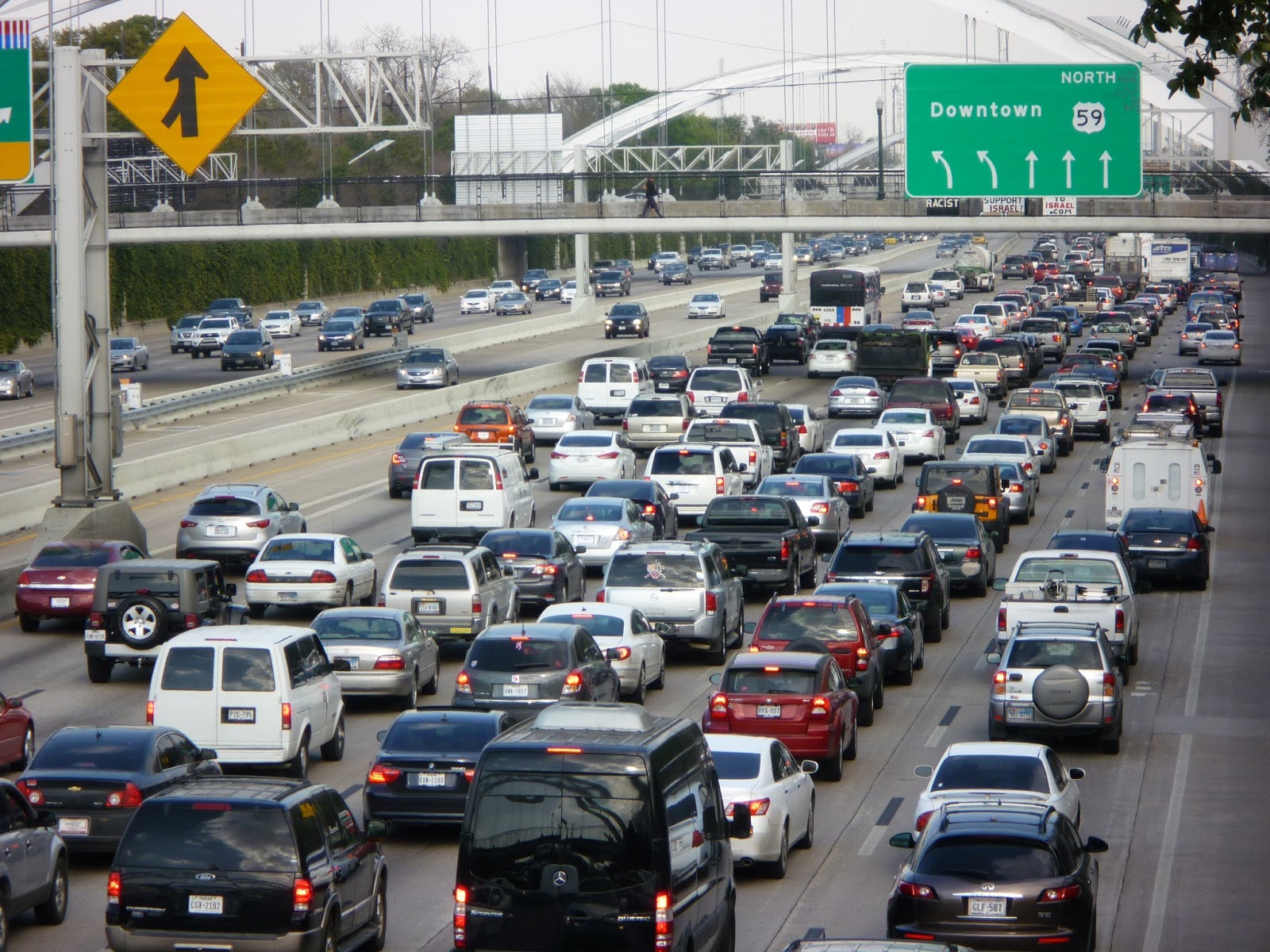
Three years ago (3/31/2015 -- "Up and Down the Dial"), I posted about the #SiriusXM satellite "highway"—taken each night; sometimes holding my sanity together on the parking lot known as Houston traffic, descending like a femoral artery into downtown.
The alchemy of memories and music transports me back on a tightrope time-machine to a place when we were all pretty "kewl", if I can say so myself. “Fast and Cool” as in the club, or Fast Times at Ridgemont High, for movie buffs.

Maybe a long time ago, but I remember when we were buff and the feathered haircuts fell just right on starched oxford button-downs. The girls all dressed for each other, and the wild night was calling. There was a time, back in my prime, when your old-man could really lay it down; but we didn’t rely on Instagram or Facebook to show everybody. It was sealed in our memories.
The music, tasting the rum, giving or getting all the jokes; ok, crank up the car stereo, and take off. The feel of a slow-dance with that girl you like… in the end, there's only the dance. How did the years go by so fast but the memories play back so slow? The smell of a ski boat's exhaust, a bonfire; I can hear the roar of the crowd, or the whisper in the ear. Youthful discovery is like electricity, but the assurance of wisdom is comforting. Life’s a balance in every decade. Maybe my pendulum needs to swing back to happiness; time flies whether you’re having fun or not.
It could be the passing of an old friend recently, or the end of a long week sending me on this journey, but my “trigger” is often just the right song, which takes me to the file cabinet in my head: pulling out the right disk from the right decade. We manually take it out of the sleeve and place it on the record player, crackling and hissing with expectation. Easter is the season of passage from death to life. The memories linger tonight in the “bardo” or in-between: I don't try to reconcile the past, but I do go back.
Without a physical photographic record on social media, how do I prove our youth? We were from all over the state, and the world was much more laid back. Somehow we had enough money to pool our resources as a group; supporting a large social structure consistently together to have a good time, and act “big”. I went to high school and college with the fast and cool crowd, always looking for adventure, maybe we were like the Club Gryffindor before we knew about Harry Potter. Or it might have been a middle-child syndrome, seeking to fit-in?
I would like to think of those foolish, happy days not as my last fling, despite the age and the miles. I believe that there are new beginnings in every springtime; I’d like to be happy again. Maybe we can get together and shake off the worldly blues and stride out tomorrow with the same arrogant confidence we had in our twenties, when everything was possible?
Probably not, but at least give the same swagger. I have more money and less hair. My car is not as hot, but more reliable. I’m more educated, but hopefully wiser. The songs seem more poignant now; the friendships deeper and more valuable. At least we can commiserate rather than compete—like we did back in those heady days. I don’t want to impress anyone like we used to, I’d rather show humility and kindness than competence and success. My heart yearns to express connection, admit defeat, listen with an attentive ear, be slow to speak, quick to squelch my opinion, easy to talk to, or ask for a favor.

“Grief” and its verb “grieve” come from the Latin gravis, “heavy, weighty” and its verbal form, gravare, “to burden or cause to grieve.” Grieving is like being weighed down with sorrow and a sense of loss. “Mourn” has its origins in the Old English murnan, “to mourn, to be anxious”. Jung says that mourners are fortunate because they are involved in a growth process, that “even though it cost me a great deal to regain my footing; now, I am free to become who I truly am.” (end quote) This is God’s truth, because the more I’ve cried and felt wretched and worthless, the more often I've felt on-a-passage (journey), and that I could have occasional moments of utter joy.

I think we know now how elusive confidence really is; the escalator has made some unexpected stops. Values now drawing respect are affinity, realism, collaboration, servant-leadership, empathy, kindness, faith, relationship, and humility. Money, beauty and power are not only elusive but ephemeral. Age tends to level the playing field even for those who woke up on third-base. (you know who you are).
Character is formed in the crucible, but everyone yearns for a second-chance; like the magical saying under the pyramid, on the back of a one-dollar bill: novus ordo seclorum (“a new order for the ages”). That’s what's astonishing about Easter; with Christ there is always the opportunity to brush yourself off and start again. His work on the cross gives us new life, forgiveness in exchange for our brokenness. This year I will relish in free grace, give thanks for true friends: “put that one on His tab, please…” 

I need to write off a few things, people, and losses, starting again with a clean ledger; don’t we all? Happy Easter.

©Mark H. Pillsbury


Tuesday, September 26, 2017

Dirty Laundry (1982) Don Henley Predicts the Future

Dirty Laundry: Don Henley Predicts the Future on 1982 Solo Album, "I can't stand still" (released 10/12/1982)

(Houston) I've written about Texas artists before, but one of the largest stars in Texas music history is Don Henley, who wrote a prescient piece for his first solo album in 1982 about TV news: "Dirty Laundry," appearing on I Can't Stand Still. Henley comments on the nature of the news "infotainment" industry before that was even a word; before the internet, reality TV, or social media.

Similar themes run through much of his work with the Eagles, or on his own, as an activist singer/songwriter: loss of innocence, the cost of being in the public spotlight, naivete of victims' perspectives, perils of fame, exploitation of tragedy, illusion versus reality, in-authenticity, corruption in news media, and the reality of #FakeNews (before much of this was part of today's lexicon).

When did Don Henley first read The Catcher in the Rye? 

Was it in 1961 or 1962 at the height of Kennedy’s "Camelot" presidency, during his first or second year of high school? How did young Don Henley relate to young Holden Caufield?
Did Don Henley learn to drown out the cacophony of oppressive “fakery” permeating the world, through music? 

Did music give him the bridge to his own authentic voice, like J. D. Salinger’s writing? 

Ten years after the book was written, Salinger appeared on the cover of TIME magazine in 1961, and Don Henley may have found his calling as a musician when he read in The Catcher in the Rye (quote): “a woman's body is like a violin and all; and that it takes a terrific musician to play it right.” The ladies’ man begins his journey in a band (in North Texas) with Salinger’s words deeply embedded in his mind.

In 1982, at 35-years old, Don Henley still felt like he was living in a time of great mistrust, a feeling that one-nation undivided, was rapidly disappearing. Henley saw even then, the prevalence of lawyers, and the everyone-for-themselves ethos of modern culture, where men and women sue each other regularly, "it's a very insidious thing," Henley said.
"Writing songs is therapeutic for me. It's a way of trying to make sense of a world that often doesn't make sense at all," he said. "It keeps me off the shrink's couch, keeps me from climbing a tower with a rifle (a reference to the UT/Austin mass-shooting of 1966, when Henley was 19?)." "Creating is a spiritual act, as well as a kind of meditation." (end quote)
Written for a LP which contained an interesting juxtaposition of dark themes; the song was developed as part of his first solo album in an atmosphere of excitement and productivity. Although Henley always thought there's room for social commentary in music, one of the basic principles of folk, singer/songwriters; "you can't hit people over the head with it." Henley believes, "you can comment, but you can't preach." 

In "Dirty Laundry," humor and satire protect against heavy, or preachy themes; but producing a song completely applicable as social commentary 35-years after it was written, is truly remarkable.  Like The Catcher in the Rye, I realize it sounds a little Holden Caulfield-esque calling everyone in TV news a phony, but Henley really did think everyone in that business was a phony.
"I got divorced and my personal life fell apart. I don't know if you feel this way, but when you're depressed, it's really easy to see everything that is fake about other people and life, and I just started seeing all that. How phony celebrity was, how phony everything is. You channel your inner-Holden Caulfield, you know?"--Ethan Hawke (writer, producer, director, actor)
I've taken the liberty to update the lyrics to apply to 2017 times, but the spirit of the song has been left unedited. I hope you like my adaption, and the song is common enough to your memory that you will sing along! 

Saturday, December 8, 2012

The Facebook Vote


More thoughts on Facebook

Have you voted? No, not the presidential vote, thankfully that is over. The vote on Facebook [“FB”] policies going forward. As stated in the policies, if more than 30% of all active registered users vote, the results will be binding. If turnout is less than 30%, the vote will be advisory. Don’t they appear democratic when in reality FB can never be bound by users?

In previous blog posts here on The Rostra Novum* (The New Rostra), I wondered aloud whether the new format, or going public was such a good idea; now I am curious what Facebook has to do to meet shareholder demand. My presupposition is that they have to give investors value in return for their stake in the company and other than advertising on the pages which don’t work that well, FB’s best revenue engine is data mining.


Facebookers expect to see an attractive format not always changing or confusing, logical interface without oppressive advertising (I have never clicked on a pop-up ad), and plenty of visually stimulating newsfeed items and timeline photographs about which they are interested. Issues of control, privacy, shareholder value, security, patent infringement, mergers, expansion to other devices, regulation, and overall user satisfaction swirl around this nascent Goliath now such an integral part of our online lives.

Nonetheless, value in the platform is keeping up with friends and their families in a way that could not have happened just five years ago! It is a bragbook fueled by a culture of immodesty and narcissism allowing a user to “share” and “show” the best and brightest side of their lives. The scale and reach of Facebook is of inestimable value or users would have stopped logging on daily a long time ago. It always amuses me when I hear someone took down their FB page in rebellion against the Evil Empire, kind of like running away from home as a kid; you know they’ll be back.

For people or organizations this huge platform is a way to show the world in one “Page” what one makes out of life; how they fulfill their existence whether commercially, artistically, or socially. In March 2012, FB reported that there were more than 42 million “Pages” with 10 or more “Likes.”


Because this is the year after, the year of Facebook, and as campy and narcissistic as it’s become, its enjoyment for me diminished; although it is a great way to keep up with everyone’s photos. Now that half of American adults are on FB, newbies and amateurs weigh down the newsfeed with clip art musings, pet pictures, affable affirmations, and insignificant drivel only your aging mother could love. (And having my parents on FB says a lot: it is hardly cutting-edge, now fairly mainstream. If you want up-to-minute news, hip commentary, and social relevance; go over to Twitter® your parents will never get on Twitter®).

Being completely open on social media, I don’t mind whether people know my activities; however, when I think about what is out there, the enormous amounts of data available chronicling my routines: where I work, shop, what I read, eat, buy, whom I love, with whom I disagree, or where I go when I leave my home? Marketing minions leverage this by profiling and targeting messages for the audiences they address, whether the product or service is wanted. Who else is watching?

FB expects to gather as much data on its users as is possible from all the items we place on their servers. It expects to use this data to tailor advertising to each user every minute they are on the site. It also expects to crunch all the data into usable sections of information that it can market to companies who want to apply this amazing database to their marketing. The immense value of all this should be reflected in the price of Facebook stock [NASDAQ: FB] which has gone from $38 in May to as low as $17 in September. So was the initial public offering price too high, poorly executed, or does this proposition not quite yet bring enough value? As long as advertisers can engage with more than 900 million monthly active users, Facebook will always have a value-proposition, albeit one that evolves.

All this information is sliced and diced, stacked and folded until it fits into the right spot; where the data dumps into exactly the right inbox. Photo albums made of paper, cardboard, stickers and tape have been digitally replaced. Does FB own all the pictures you took on vacation, at the reunion, or sitting around your house? Even though these trinkets of time seem unimportant to you; no one thinks they are valuable, someone out there is curious enough to peek into your lifestyle. Is privacy and modesty dead?

Over Fourteen Thousand (14,586) visits after I started this blog, readers still abound. Much of who I am is contained in these posts, just like #Facebook. Since going on FB in 2009 and seeing it become a household word in 2011, I’ve posted almost everyday until just about the time of the IPO (“going public”).

Acknowledging their reach is recorded as massive, my suspicion is that the decline in the stock price mirrors the loss of interest in this platform. FB exists on a scale almost like a governmental entity which supposedly exists for the benefit of the people. Changes in policy or format send ripples throughout culture, but there is not much anyone can do if they use the service for free? Which brings me back to the sham of voting about new policies and the 30% threshold in order to make changes binding. Did you vote?

©Mark H. Pillsbury

*blog post 12/25/2011 re: FB introduction of new Timeline format (rostra novum blog, see below)

Thursday, July 28, 2011

KIAH (CW) Channel 39 NewsFIX

Watched Channel 39 CW Houston News FIX last night in the 9 O'clock hour and it is a new type of late evening news for the younger demographic (if they actually watch the news on TV).

Part TMZ, part Twitter, part tabloid trash, part newscast: a quick hitting hybrid for the younger TV generation not hip to Master Dave Ward and Gina Gaston over on the traditional ABC station.

It is apparent that news will never be the same, after social media gets us the feed in 140 characters or less. I found it distracting as I relaxed in a dark room, but it was interesting. "A" for effort, 39.

Call it the ADD/ADHD newscast for the under 30-set, but it had an eclectic mix of infortainment and news. The billboards advertising the NewsFIX all over town make it appear this is a major push for the station. Good luck.

Friday, June 17, 2011

Ahem... I am up on the rostra novum... Hello!

image credit: Brian Topp (the rostra vetera)

Just opened up a blogspot account for The New Rostra (rostra novum)
This is a forum where I can share my thoughts and writings without weighing down other social media outlets. (facebook.com/mark.pillsbury or @markpills on Twitter)

In the new world of digital media the "town crier" can amble up to the platform on the square and literally broadcast to the world in a new (digital) way, that Cicero would never have been able to comprehend. (see image of the rostra vetera near the assembly ground of the old Roman Forum)

Thank you for checking this out. Please make comments or come back.
I look forward to sharing the conversation with you.
For now let me step down off the rostra and gather some material.

Best,
MHP